
In brief
In brief
- Attia’s Centenarian Decathlon starts with activities you would like to keep doing later in life, then works backwards to the capabilities they require.
- His personal targets are ambitious examples, not a fitness test everyone needs to pass.
- Research supports appropriate physical activity, resistance exercise, aerobic fitness and balance training, with important limits on longevity claims.
- Choose activities that matter to you, understand your starting point, progress sensibly and adjust the plan as your circumstances change.
On this page7 sections
Sunday night, and you’ve got a walk in the Grampians open on your phone. There’s a lookout you’ve been meaning to reach. You follow the track with your thumb, zoom in on the steep section as though a closer look might make the hill less steep. It doesn’t. Then you look at the week ahead and save the walk for later. Again.
We’re pretty thorough when it comes to planning retirement. Super balances, savings targets, when we might finish work. The body that’s meant to enjoy all that free time barely gets a mention. Your super sends statements. Your legs don’t.
That’s why Peter Attia’s Centenarian Decathlon caught my attention. He starts with the things he wants to be able to do in later life, then works backwards to what he’d need to train. I like that thinking. Some of the fitness targets he sets himself, though, are demanding enough to make retirement sound as if it comes with an entrance exam. [1]
It doesn’t. Those are his targets, not a pass mark for everyone else. And I’d hate for someone to dismiss a genuinely useful idea because the numbers made it sound like it wasn’t for them.
So back to the Grampians walk. What do you want your body to still be up for when you finally have the time? And where would you start?
You’ve Planned for Retirement. But Have You Planned to Move Through It?
You’ve organised somewhere to stay, checked the weather and worked out which walk you want to tackle. But there’s another part of the planning that rarely makes it onto the list. Will you feel comfortable walking for a couple of hours? How will your legs handle the climb? And when you reach the top, will you have enough left in the tank to enjoy being there?
None of those questions has much to do with your retirement balance.
This is where the distinction between lifespan and healthspan becomes useful.
Lifespan is straightforward: how many years you live. Healthspan describes the years lived in relatively good health, although exactly how researchers define and measure it can vary. Research has highlighted an important gap between increasing life expectancy and increasing the years people spend in good health. [2]
Living longer and being able to participate in the things you value aren’t quite the same objective.
We tend to assume that when work settles down, the body will still be ready for whatever we’ve been putting off. The travel. The walks. The time with family. All those things sitting in the one day category.
Except your body doesn’t know you’ve got a retirement date circled on the calendar.
Physical capacity changes over time, influenced by health, activity, previous injuries and individual circumstances. Some changes can be managed or improved through appropriate training. Others require adaptation. Nobody can tell you exactly what your body will be capable of twenty years from now.
But you can start thinking about which abilities you’d particularly like to keep, and whether you’re giving them much attention today.
That’s a more useful question than simply asking how long you’d like to live.
Continue reading
Before You Tackle the Steep Bit
More reading on the strength, balance and walking capacity behind the things you’d rather not give up, starting from where you are now.
The Goals Sound Ordinary. The Numbers Don’t.
Most of the activities Attia describes aren’t particularly glamorous. Getting off the floor. Carrying something upstairs. Lifting a suitcase. Playing with grandchildren.
You probably wouldn’t put any of them on a fitness poster.
But work backwards from those ordinary activities and the physical demands become more interesting. Attia takes that thinking considerably further, with some personal benchmarks that can be confronting.
What Attia Actually Proposed
Peter Attia is a physician known for his work on longevity. His Centenarian Decathlon is a way of thinking about the physical activities he wants to remain capable of performing at an advanced age.
Despite the name, it isn’t a formal ten-event fitness test. In his original explanation, Attia described 18 activities he’d personally identified as important, including getting up from the floor with minimal support and lifting a 30 lb suitcase into an overhead compartment. [1]
The list is his. Yours would almost certainly look different.
The process behind it is called backcasting. Rather than starting with your current fitness and wondering what it might allow you to do later, you begin with a future activity and work backwards.
What physical abilities would it require? What might those abilities look like ten or twenty years beforehand? And how could you begin developing or maintaining them now?
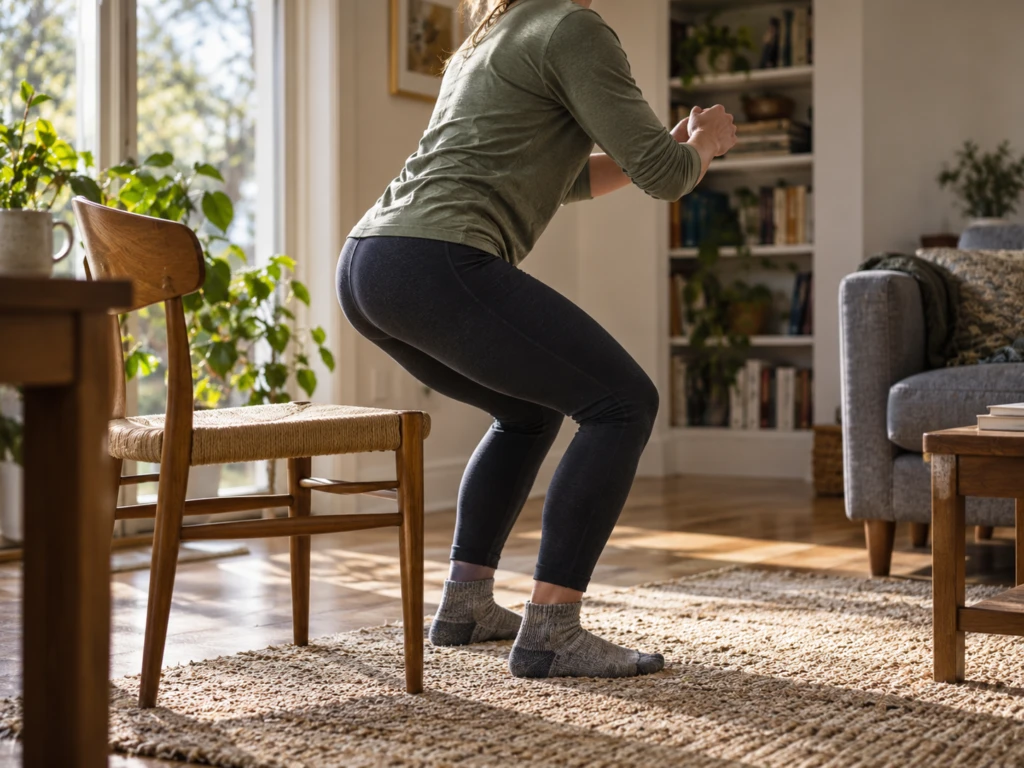
Take getting up from the floor. There’s leg strength involved, certainly, but also joint movement, balance, coordination and the ability to control your position.
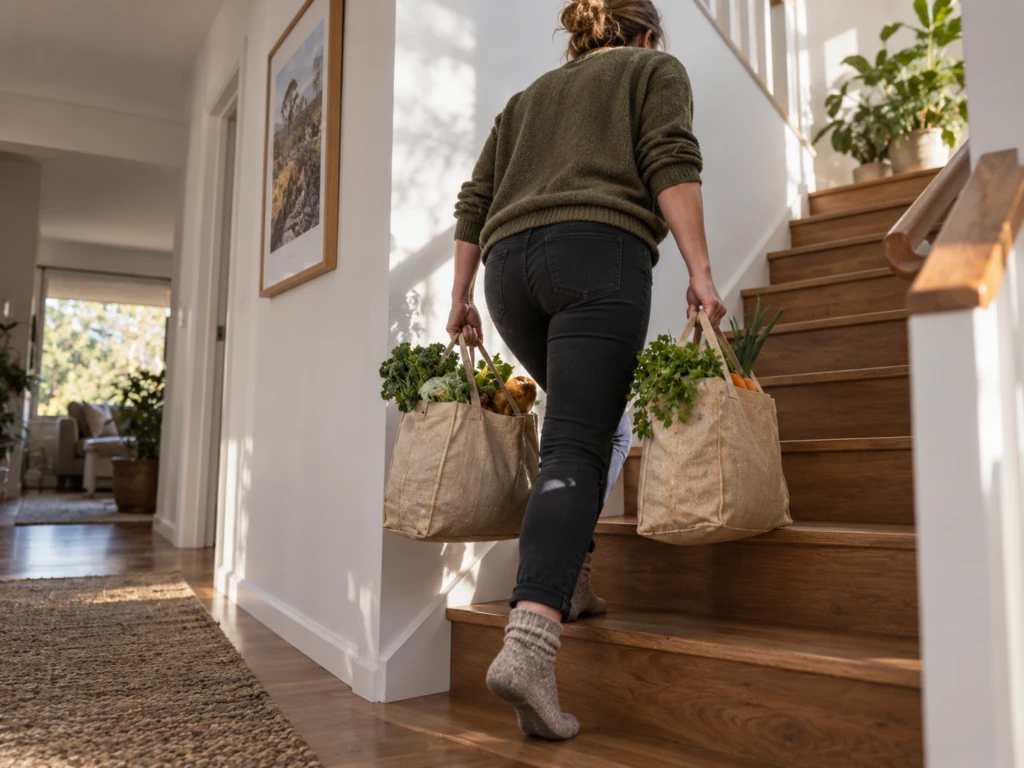
Or carrying shopping upstairs. The bag doesn’t care whether you’ve been training with dumbbells, resistance bands or a machine at the gym. Your body still needs to manage the load while you move.
Suddenly, exercise has a more personal reason for being there.
Where His Demanding Targets Fit
Attia deliberately sets ambitious standards for himself. His reasoning is that physical capacity may decline with age, so he wants to build enough reserve earlier in life to support the activities he values in his later decades. [3]
I understand the argument. I also understand why hearing some of those targets might leave you wondering whether you’ve already missed the starting gun.
But here’s the distinction worth protecting: an ambitious personal target isn’t a universal requirement for healthy ageing.
The Centenarian Decathlon is a framework for organising long-term physical goals. It isn’t a clinically validated test that determines whether somebody is ageing successfully.
And if your ambition is to keep walking around Warrnambool’s Foreshore Trail, enjoy the Grampians or get down on the floor with your grandchildren, those are perfectly reasonable places to begin.
We don’t first need to turn you into an endurance athlete.
Which raises a fair question. If we put the impressive numbers to one side, what does the research actually tell us?
What the Evidence Actually Supports
Quite a lot, actually.
Just not everything that gets promised in the name of longevity.
The important distinction is that researchers have studied physical activity, resistance training, aerobic fitness and balance exercises extensively. They haven’t established Attia’s personal Centenarian Decathlon as a separate, validated intervention that makes people live longer.
His framework gives us a way to think about training. The research helps us understand why the underlying physical capacities matter.
A 2025 international consensus on exercise and healthy longevity in older adults supports appropriate combinations of aerobic, resistance and functional training. It also recognises something that can get lost when exercise advice turns into a list of impressive numbers: training needs to reflect a person’s abilities, health and circumstances. [4]
So the question becomes less about whether you can meet a particular benchmark and more about whether worthwhile benefits are available at a realistic starting point.
This is where the evidence becomes encouraging.
A large 2023 analysis of prospective studies found that even modest amounts of non-occupational physical activity were associated with lower risks of cardiovascular disease, several cancers and premature death compared with inactivity. The relationship wasn’t a straight line where every extra hour produced the same additional benefit. Meaningful associations were already present at relatively modest activity levels. [5]
Strength and aerobic fitness tell a similar story from different directions.
Kyle Quinn, Registered Osteopath
A 2022 review found that muscle-strengthening activity was associated with lower risks of several major chronic diseases and mortality. [6] A substantial 2024 overview of research found that higher cardiorespiratory fitness was consistently associated with more favourable health and mortality outcomes. [7]
Now, there’s an important limitation across those findings. Much of this longevity evidence is observational. It shows associations between activity, fitness and health outcomes, not proof that a particular exercise routine will add a guaranteed number of years to your life.
But it does challenge the idea that exercise only becomes worthwhile once you reach an extraordinary level of fitness.
And when we examine research involving exercise interventions, we can see benefits in more specific outcomes.
A Cochrane review combining 108 randomised controlled trials found that exercise programs reduced the rate of falls by approximately 23% among community-dwelling older adults, compared with control groups. Balance and functional exercises were particularly important components of effective programs. [8]
That’s a meaningful result, although it’s a population-level reduction in fall rates, not a promise that a particular exercise will prevent an individual’s next fall.
Put those findings together and the argument becomes fairly straightforward.
Strength, balance and aerobic capacity are worth developing. The amount, type and progression need to suit the person. And the research doesn’t require everybody to chase Attia’s performance standards before their efforts count.
For someone who’s just started walking regularly, that matters rather more than whether their fitness watch thinks they’re doing enough.
Four Capacities Behind the Everyday Tasks
Attia groups his training approach into four broad domains: stability, strength, aerobic efficiency (often discussed through Zone 2 training) and peak aerobic capacity, commonly measured through VO₂ max. [3]
These aren’t separate boxes that everyday movements fit neatly into. They’re overlapping capacities that contribute to what your body can do.
Mobility matters too. Having enough usable movement through your joints influences how you approach different tasks. It just isn’t a separate fourth pillar in Attia’s framework.
Here’s how I’d think about the four domains in ordinary life.
Stability
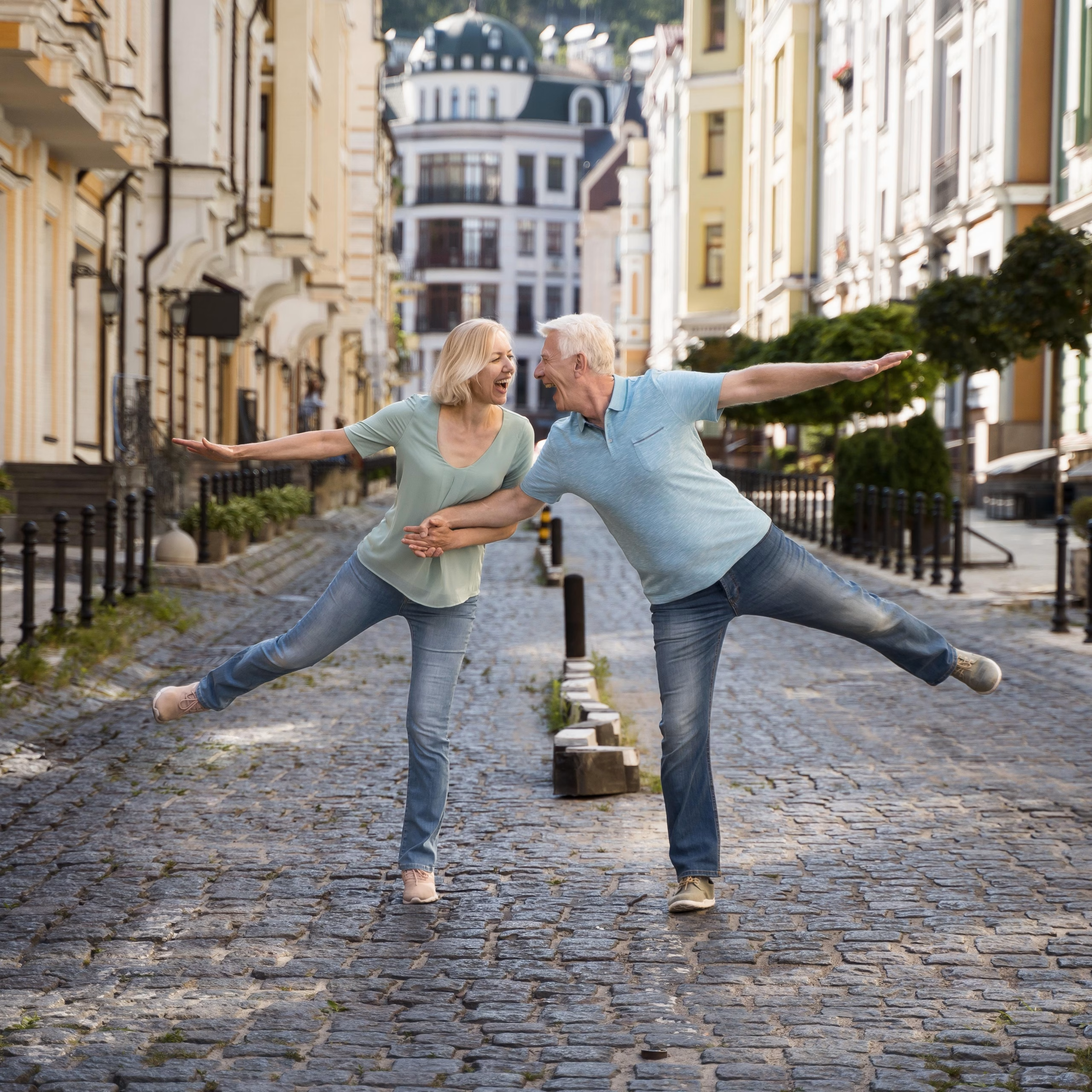
Picture a walking track where the surface changes from firm ground to loose gravel. Your foot lands slightly differently than expected, and your body has to adjust while you’re still moving forward.
That’s stability doing its job.
It’s not just standing perfectly still on one leg while somebody counts to thirty. Stability involves controlling movement, responding to changes in position and managing balance as a task becomes more demanding.
For one person, that might mean supported weight shifts or simple balance activities. For another, it could involve more challenging movement tasks.
The research supporting balance and functional exercise in reducing fall rates among community-dwelling older adults is meaningful. [8] But no single balance score tells the whole story, and somebody experiencing falls or significant unsteadiness may need an individual assessment rather than a self-imposed test.
The useful question isn’t simply whether you can balance. It’s what kind of control your activities require.

Strength
Getting up from the floor, climbing stairs and carrying a load all rely, to varying degrees, on muscular strength.
And no, you don’t need to deadlift your bodyweight before you’re allowed to carry the groceries.
What matters is having enough capacity for the task, with some room to manage the occasions when it becomes harder.
Think about getting down to play with a grandchild. The movement requires control on the way down and enough strength to rise again. Depending on the person, it might also involve using a chair, changing position or finding a more comfortable strategy.
There isn’t one correct version of being capable.
Resistance training can improve strength and physical function, including in older adults, when appropriately selected and progressed. [4]
But the details matter. How much load? How often? Which movement? What symptoms or limitations are present?
If I can’t explain why an exercise belongs in your plan, it’s worth asking whether it belongs there at all.
Aerobic Efficiency / Zone 2
Warrnambool’s Foreshore Trail is a useful place to think about sustained aerobic activity.
You might be walking at a comfortable pace, with enough effort to feel you’re doing something but not so much that you need to stop every few minutes.
Your heart, lungs and working muscles are supporting a repeated task over time. Developing that capacity can make sustained activities more manageable.
Attia often discusses Zone 2 training, a form of aerobic work performed at an intensity that can be maintained for a prolonged period. It’s one tool for developing an aerobic foundation.
He’s also acknowledged a problem with making the definition of Zone 2 too precious. People can become so focused on the precise training zone that they lose sight of the reason they’re doing it. [9]
I think that’s an important admission.
If you’ve only recently started walking regularly, whether your watch has perfectly labelled the session probably isn’t the question that deserves most of your attention.
It’s whether the activity suits your current capacity and whether you can repeat it, then gradually build on it.
The training terminology can come later.
The Barefoot Bulletin
Stay Moving With the Weekly Newsletter
Grounded, no-nonsense insights on movement, recovery, and everyday resilience — straight to your inbox, once a week. No spam, unsubscribe anytime.
Peak Aerobic Capacity / VO₂ Max
Now imagine the walking track suddenly turns uphill. The effort changes. You’re breathing harder, your heart rate rises and your body needs to deliver more oxygen to the working muscles.
VO₂ max describes the maximum rate at which your body can use oxygen during intense exercise. It’s one measure of cardiorespiratory fitness.
Higher levels of cardiorespiratory fitness are associated with lower risks of several adverse health outcomes in large observational studies. [7]
That doesn’t mean everybody needs to start high-intensity interval training tomorrow.
Higher-effort exercise can be an option for developing aerobic capacity, but suitability depends on current conditioning, health, symptoms, recovery and experience.
For some people, the sensible first step is becoming comfortable with regular walking or cycling. Others may be ready for more demanding work.
The important thing is understanding which capacity you’re working on, why it matters to your activities and what your body can currently manage.
Build Your Own Centenarian Decathlon
Here’s the part I like most about Attia’s idea.
You don’t have to borrow his list. In fact, I think it works better when you don’t.
The whole point is to start with the life you want to participate in and work backwards towards the abilities that might support it.
Choose Activities That Matter to You
Start with one activity.
Not ten. Not an entire training program. One thing you’d genuinely like to keep doing.
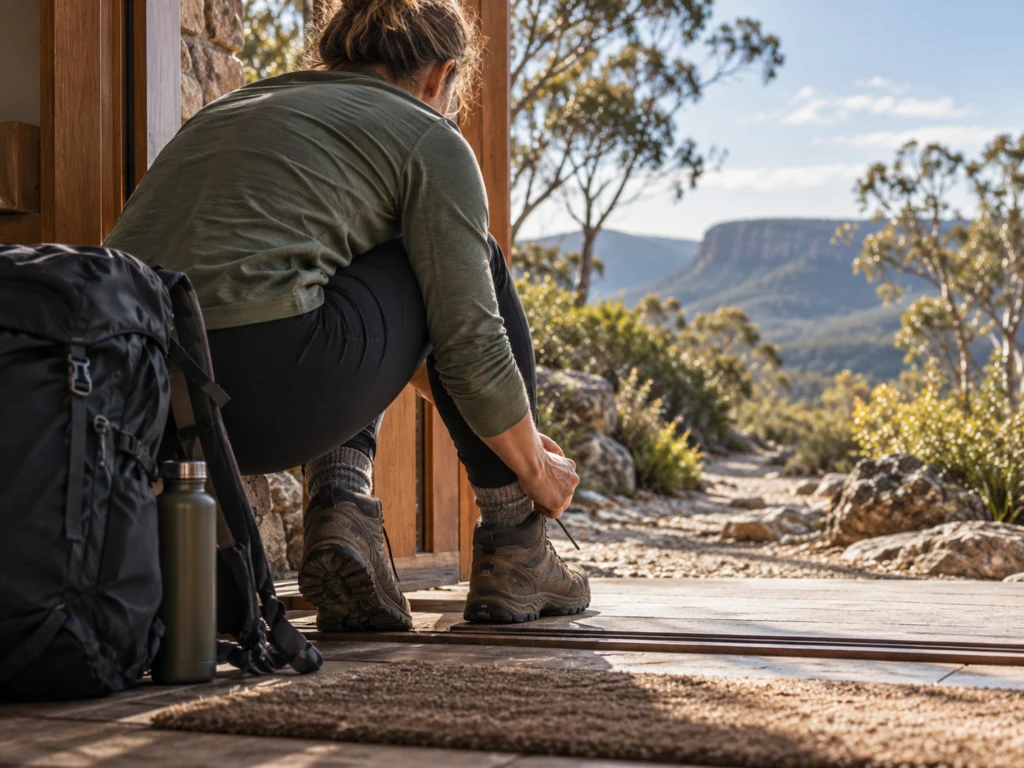
Perhaps it’s the Grampians walk you’ve had saved for months. Maybe it’s getting up from the floor comfortably, carrying your own luggage or continuing to enjoy a favourite activity with family.
The activity doesn’t need to impress anybody. It does need to mean something to you.
Then get specific.
There’s a difference between walking around the block and tackling a steep track for a couple of hours. They both involve walking, but place different demands on your body.
If the goal is specific enough, we can begin to understand what it requires.
If the goal is just get fitter, we’re already doing a fair bit of guessing.
Continue reading
More From the Journal
Practical reading on moving well now, so you can keep doing what you enjoy later.
Work Backwards From Your Starting Point
Take the Grampians walk.
You might need enough aerobic capacity to keep moving for an extended period, strength to manage the climb, balance on uneven sections and enough usable movement through your hips, knees and ankles to handle the terrain.
Now consider what you can comfortably do today.
Maybe a thirty-minute walk is already easy. Perhaps ten minutes is challenging. Maybe the flat sections are fine, but hills bring on discomfort or leave you unusually breathless.
Those aren’t interchangeable starting points.
This is where assessment and clinical reasoning can add value. Rather than selecting exercises simply because they’re popular, I want to understand what the activity demands, how you currently move, what you’re tolerating and whether symptoms or health considerations change the plan.
Sometimes the priority is building strength. Sometimes it’s improving walking tolerance, practising balance or adjusting how an activity is approached.
And sometimes it means recognising that a symptom needs medical attention before pushing the training further.
The goal isn’t to make everybody move the same way. It’s to understand what makes sense for the person in front of you.
Build Gradually and Revisit the Plan
Once you’ve identified what matters and where you’re starting, the next step is usually fairly practical.
It might be regular walking with gradually increasing duration, manageable strength sessions, balance work relevant to your goals or some combination that fits your week.
Australia’s 2026 movement guidelines recommend that adults aged 65 and over include muscle-strengthening activity on at least two days a week and functional activity targeting mobility, balance and coordination on at least three days, alongside regular aerobic and lighter activity. [10]
That’s population guidance, not an instruction for every individual to begin at that volume.
Your starting point may need to be substantially lower. Relevant health conditions, significant symptoms, falls risk, recovery and previous exercise experience all influence what’s appropriate.
Progress doesn’t always mean adding more weight, either.
It might mean walking a little further before needing a break, managing stairs with less effort or feeling more confident moving over uneven ground.
Those changes give us useful information and a reason to revisit the plan. A routine that was suitable three months ago may no longer be challenging enough. Equally, illness, injury or changing circumstances may mean adjusting the workload rather than pushing through.
I’d rather see somebody maintain a realistic routine than produce an impressive training schedule that lasts eleven days.
Understanding why you’re doing something makes the routine easier to adapt when life inevitably gets in the way.
And for most of us, life is very good at getting in the way.
What You’re Really Training For
Let’s go back to that walk in the Grampians.
The track is still saved on your phone. The steep section hasn’t become any flatter, and there’s a reasonable chance work will continue finding new ways to occupy your calendar.
But perhaps you start looking at the walk differently.
Instead of treating it as something you’ll get around to when you have more time, you begin thinking about what you could reasonably do now to prepare for it.
A regular walk. Some strength work. Gradually taking on a few hills. Paying attention to what feels manageable and what might need addressing.
Not because any of it guarantees you’ll be climbing that lookout at ninety. It doesn’t.
But because those activities have a purpose beyond reaching an arbitrary fitness score.
That, to me, is the value of the Centenarian Decathlon. Attia’s personal standards might be ambitious, but the question underneath them is useful for the rest of us.
What do you want to keep being able to do?
You might not have a precise answer for the next thirty years. Fair enough. Most of us are still trying to organise next Thursday.
But you probably know a few things you’d be disappointed to give up.
Start there.
There’s no official waiting at the Grampians trailhead to check your VO₂ max. You just want to be able to enjoy the walk.
That’s what the training is for.
Summary
Points Worth Remembering
- The Centenarian Decathlon is Attia’s personal framework for backcasting from meaningful future activities, not a validated test or compulsory set of targets.
- Healthy longevity is not only about years lived. Physical capability can influence how people participate in activities they value.
- Strength, stability, aerobic efficiency and peak aerobic capacity contribute to everyday movement; mobility is also relevant.
- Exercise evidence supports useful health and functional benefits, but observational associations cannot guarantee a longer life for an individual.
- Start with a real activity and your present capacity, then build gradually and reassess as your needs change.
TAKE HOME MESSAGE
Start with the activity you don’t want to give up.
Find out what it asks of you.
That’s what the training is for.
Quick questions
Quick Questions
What is Peter Attia’s Centenarian Decathlon?
A personal planning framework: identify activities you want to keep doing in later life, then work backwards to the physical capacities that support them. It is not a formal ten-event medical test.
Do I need to meet Attia’s fitness benchmarks?
No. They reflect his own ambitious goals, not universal health thresholds. A useful plan starts with your priorities, current abilities and health circumstances.
What are Attia’s four exercise domains?
Stability, strength, aerobic efficiency (often associated with Zone 2) and peak aerobic capacity (VO₂ max). Mobility can also matter for everyday tasks, but it is not a separate fourth category in his model.
Does the Centenarian Decathlon make you live longer?
There is substantial research linking physical activity and fitness with favourable health outcomes, but Attia’s branded framework has not independently been shown to extend lifespan. Many longevity findings are observational associations, not individual guarantees.
Where should someone start?
Choose a meaningful activity, consider what it demands and compare that with what you can currently manage. Build gradually and adapt the plan. If you have significant symptoms, a history of falls or relevant health concerns, seek appropriate individual guidance.
References & further reading
View references
- Attia P. How to train for the Centenarian Decathlon. The Drive [Internet]. 2022 Jan 18. Available from: https://peterattiamd.com/how-to-train-for-the-centenarian-decathlon/
- Garmany A, Yamada S, Terzic A. Longevity leap: mind the healthspan gap. npj Regen Med. 2021;6:57. https://doi.org/10.1038/s41536-021-00169-5
- Attia P. Training for the Centenarian Decathlon: Zone 2, VO₂ max, stability, and strength. The Drive [Internet]. 2023 Jul 10. Available from: https://peterattiamd.com/training-for-the-centenarian-decathlon/
- Izquierdo M, de Souto Barreto P, Arai H, et al. Global consensus on optimal exercise recommendations for enhancing healthy longevity in older adults (ICFSR). J Nutr Health Aging. 2025;29(1):100401. https://doi.org/10.1016/j.jnha.2024.100401
- Garcia L, Pearce M, Abbas A, et al. Non-occupational physical activity and risk of cardiovascular disease, cancer and mortality outcomes: a dose-response meta-analysis of large prospective studies. Br J Sports Med. 2023;57(15):979–989. https://doi.org/10.1136/bjsports-2022-105669
- Momma H, Kawakami R, Honda T, Sawada SS. Muscle-strengthening activities are associated with lower risk and mortality in major non-communicable diseases: a systematic review and meta-analysis of cohort studies. Br J Sports Med. 2022;56(13):755–763. https://doi.org/10.1136/bjsports-2021-105061
- Lang JJ, Prince SA, Merucci K, et al. Cardiorespiratory fitness is a strong and consistent predictor of morbidity and mortality among adults: an overview of meta-analyses representing over 20.9 million observations from 199 unique cohort studies. Br J Sports Med. 2024;58(10):556–566. https://doi.org/10.1136/bjsports-2023-107849
- Sherrington C, Fairhall NJ, Wallbank GK, et al. Exercise for preventing falls in older people living in the community. Cochrane Database Syst Rev. 2019;(1):CD012424. https://doi.org/10.1002/14651858.CD012424.pub2
- Nelson N, Yeater T, Attia P. A better way to think about Zone 2. The Drive [Internet]. 2026 Aug 29. Available from: https://peterattiamd.com/a-better-way-to-think-about-zone-2/
- Australian Government Department of Health, Disability and Ageing. Recommendations for older adults (65 years and over). 24-hour movement guidelines for all Australians [Internet]. Updated 2026 Mar 16. Available from: https://www.health.gov.au/topics/physical-activity/24-hour-movement-guidelines-for-all-australians/recommendations-for-older-adults-65-years-and-over