
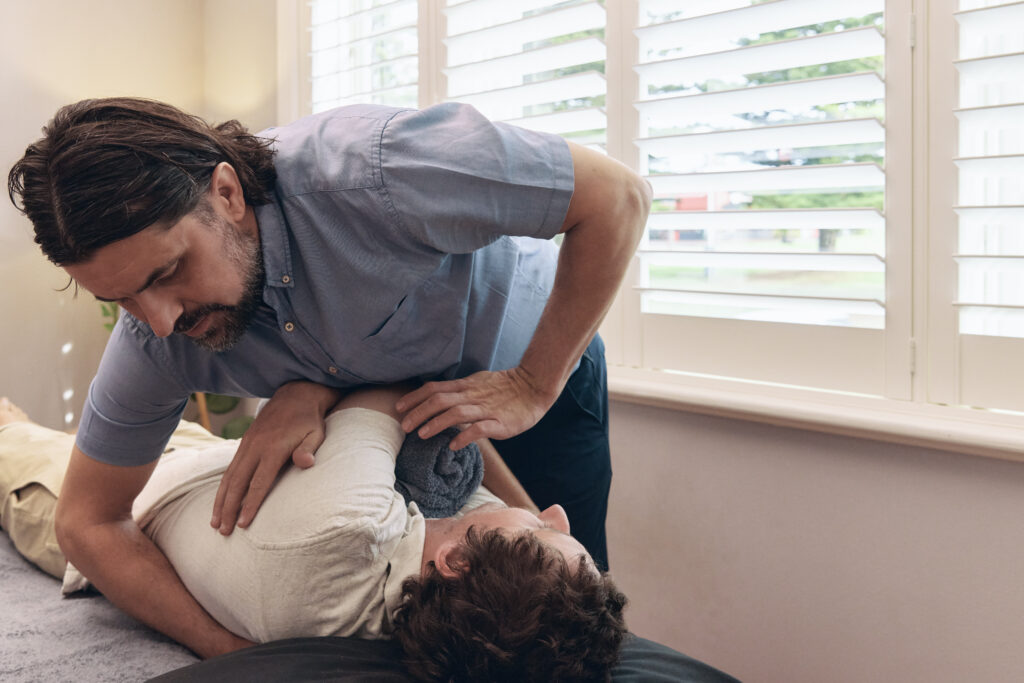
Most people treat what hurts. We find out why it keeps happening.
Why it feels so frustrating
Your back didn’t just “go”.
It had been leaving clues for months.
Back pain becomes frustrating when it settles, returns, and starts shaping normal life before anyone has explained why.
You bend. It grabs. Then it settles. Until the next time.
That’s the part that wears people down.
Not the pain — the planning.
The washing basket. The bottom shelf. Getting out of the car like there’s a committee meeting happening in your lower back.
Why this keeps people stuck
That’s usually when people start looking for a better answer. Not another “just stretch more” plan — a proper look at why your back keeps finding the same exit door.
When back pain keeps returning, the problem isn’t only the flare-up. It’s the uncertainty around it.
You start wondering what will set it off next: sitting, bending, lifting, gardening, training, or doing something completely ordinary.
The sore spot tells us where your body is complaining. The pattern tells us what might be feeding it.
Common presentations
One back.
Eight ways to ruin a Tuesday.
People book with us for back pain that shows up as lower back pain, stiffness, recurring flare-ups, pain after sitting, pain with bending or lifting, or symptoms that travel into the hip, buttock, or leg.
01
Lower back pain
A dull ache, sharp grab, or beltline pain that keeps returning.
02
Pain after sitting
Feels okay at first, then slowly stiffens like it has filed a formal complaint.
03
Pain with bending or lifting
The washing basket. The gym. The garden. The tiny task that became an event.
04
One-sided back pain
A pinch, catch, or loaded feeling on one side.
05
Mid-back stiffness
Tightness through the middle back, ribs, or between the shoulder blades.
06
Hip or buttock referral
Back pain that drags the hip, pelvis, or buttock into the argument.
07
Leg symptoms
Pain, tingling, numbness, or symptoms that travel into the leg.
08
Recurring flare-ups
Settles, behaves for a while, then returns when life gets heavier.
Different presentation.
Same question: what’s your back reacting to, and why does it keep coming back?

Why it keeps happening
Your back isn’t the villain. It’s the whistleblower.
Assessment looks at the pattern around the pain — movement, load tolerance, stability, mobility, recovery, and daily habits.
The sore spot matters.
It’s just rarely where the story starts.
You bend for something small, and your back reacts like that was the main event.
It wasn’t. It was the clue.
Common things that can feed the pattern
- load tolerance
- hip and pelvis movement
- mobility and stability mismatch
- bracing patterns
- previous injuries
- recovery, sleep, fatigue, and stress
- training load or work demands
- daily habits repeated often enough to matter
Not all of these will apply. That’s the point of assessment.
Most people treat what hurts.
We find out why it keeps happening.
How we assess
We assess the back. Then we find who keeps handing it the bill.
First, the story.
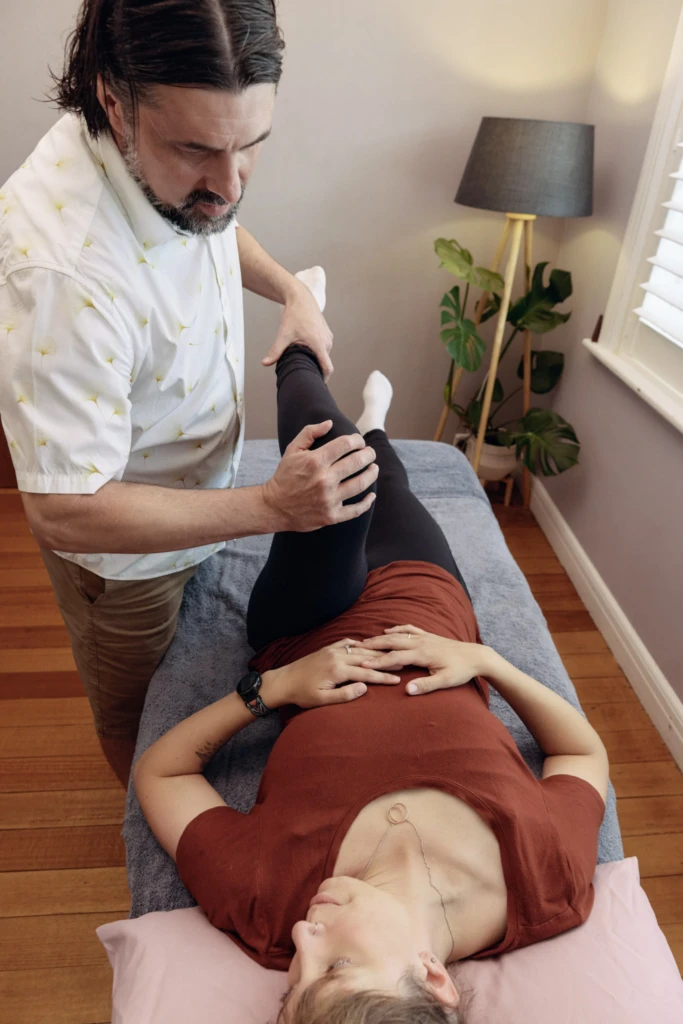
Then we assess how you move, load and brace. Then we explain what we found in plain English.
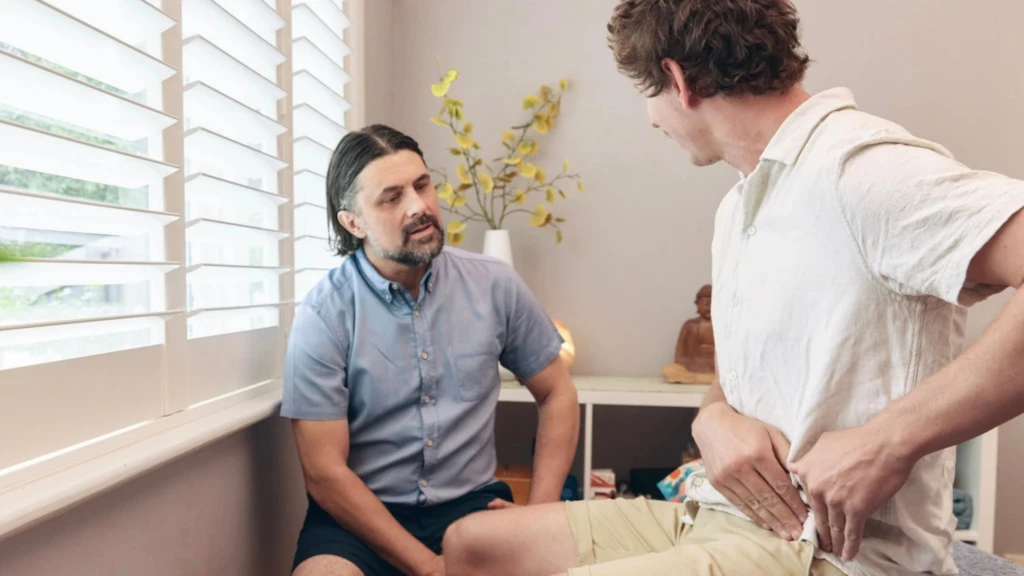
1 · Your story
What started it, what sets it off, what settles it, and what you’ve already tried.
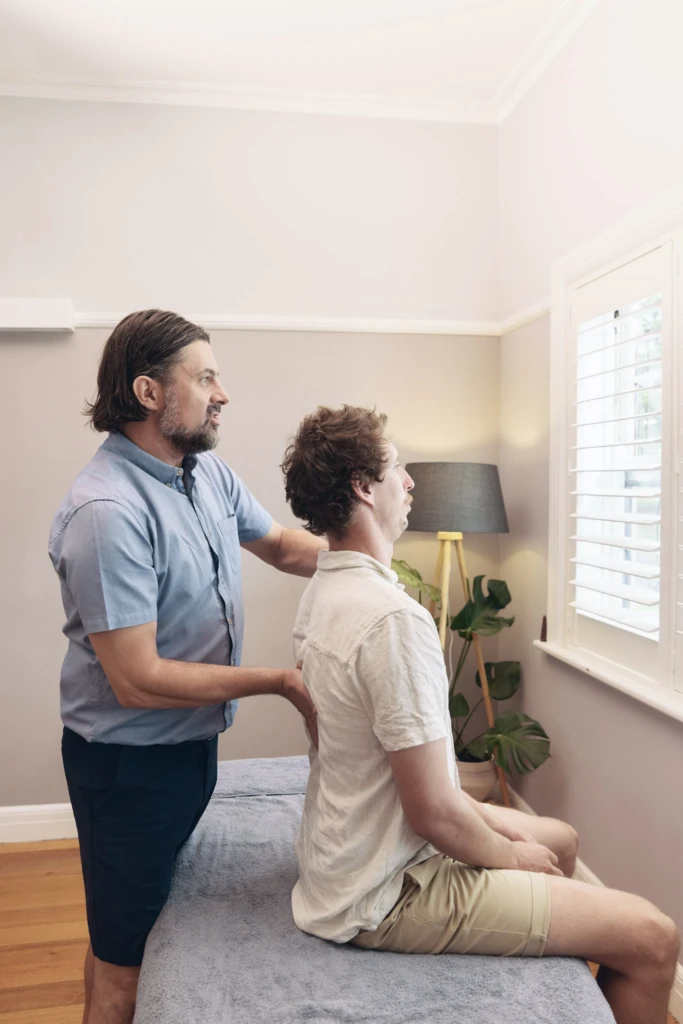
2 · Your movement
How your back, hips, pelvis, and whole body share load.
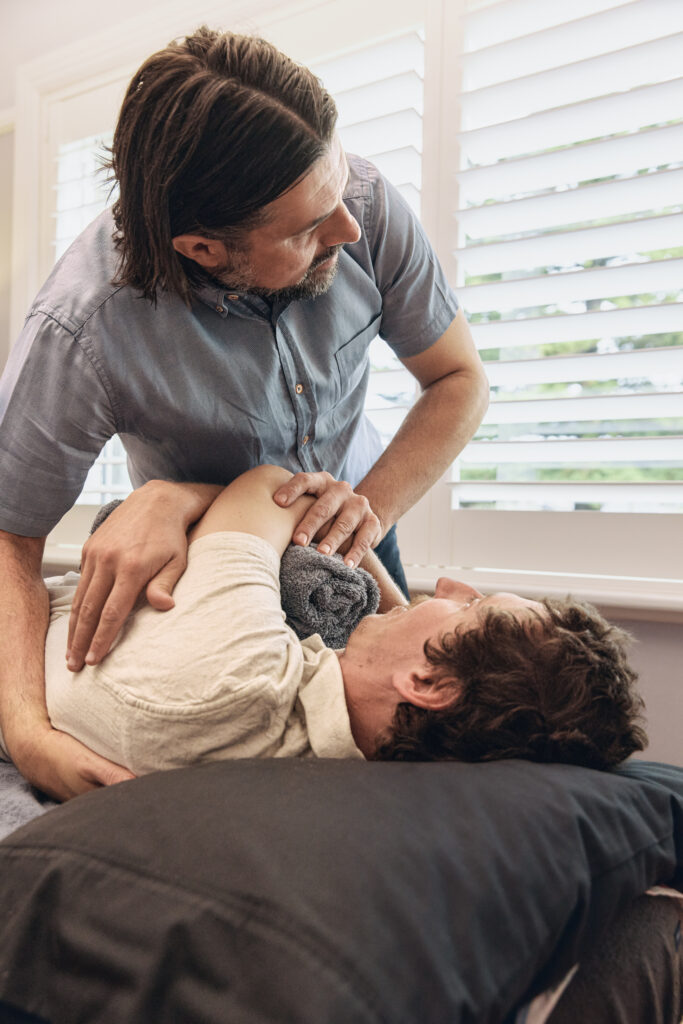
3 · Your screening
If symptoms travel into the leg, we screen strength, sensation, reflexes, and nerve tension where appropriate.
No guessing dressed up as confidence. The full method is on our How We Work page.
Find your baseline
What if three minutes told you more than three appointments?
Three minutes. A few honest answers. Not a diagnosis. Not a magic sorting hat with a Cliniko button stitched to the brim. Just a clearer starting point for understanding what your body keeps repeating.
What care may include
Treatment settles the noise. The plan changes the pattern.
Care may include hands-on osteopathic treatment, movement advice, exercise prescription, stability work, and load management — based on your assessment.
1
Hands-on treatment
Used where clinically appropriate to help settle irritation and improve how the body is moving.
2
Movement and exercise
Simple, targeted work based on what your assessment shows.
3
Load strategy
Practical changes to help your back handle the actual demands of your life.
What the plan may include
Your plan may include mobility work, stability training, graded exercise, or practical changes to how you sit, lift, train, garden, work, or get through the week.
Sometimes the issue is strength. Sometimes mobility. Sometimes the way your body braces before it moves. Sometimes your week has been asking for more capacity than your back currently has to give.
What we’re actually after
The win is bending without asking permission first.
The aim of back pain care is understanding, confidence, and a back you stop planning your life around.
Picking something off the floor without the mental risk assessment. Getting out of the car and just standing up. Carrying the washing basket without the little voice asking, “Is this a good idea?”
- bending
- lifting
- long drives
- gardening
First
A calmer back
Settle the flare enough that every bend stops feeling like a gamble.
Then
More capacity
Your back starts handling the lifting, sitting and gardening your week actually asks of it, without sending you the bill the next morning.
The destination
Less planning.
Your back takes up less space in your head because ordinary days stop needing a strategy first.
The washing basket goes back to being just a washing basket.
When to see a doctor first
Some backs need a doctor before a treatment table.
We recommend medical assessment first for back pain with certain warning signs — especially nerve, bladder, bowel, trauma, or systemic symptoms.
Most recurring back pain isn’t an emergency.
Some presentations are different.
Seek urgent medical care if your back pain involves:
- changes to bladder or bowel control
- numbness in the saddle region — the area that would touch a bike seat
- progressive leg weakness, foot drop, tripping, or loss of strength
- fever, feeling generally unwell, or unexplained weight loss
- significant trauma, such as a heavy fall or accident
- severe pain that’s worsening and doesn’t change with position
- a history of cancer with new or unexplained back pain
These are not “see how it goes” situations. Doctor or emergency care first. That list isn’t exhaustive — if something feels off, get it checked.
What to expect if you book
Booking shouldn’t require the perfect explanation.
You bring the pattern. We’ll assess it.
A first appointment includes your history, assessment before treatment, treatment where appropriate, and a clear plan.
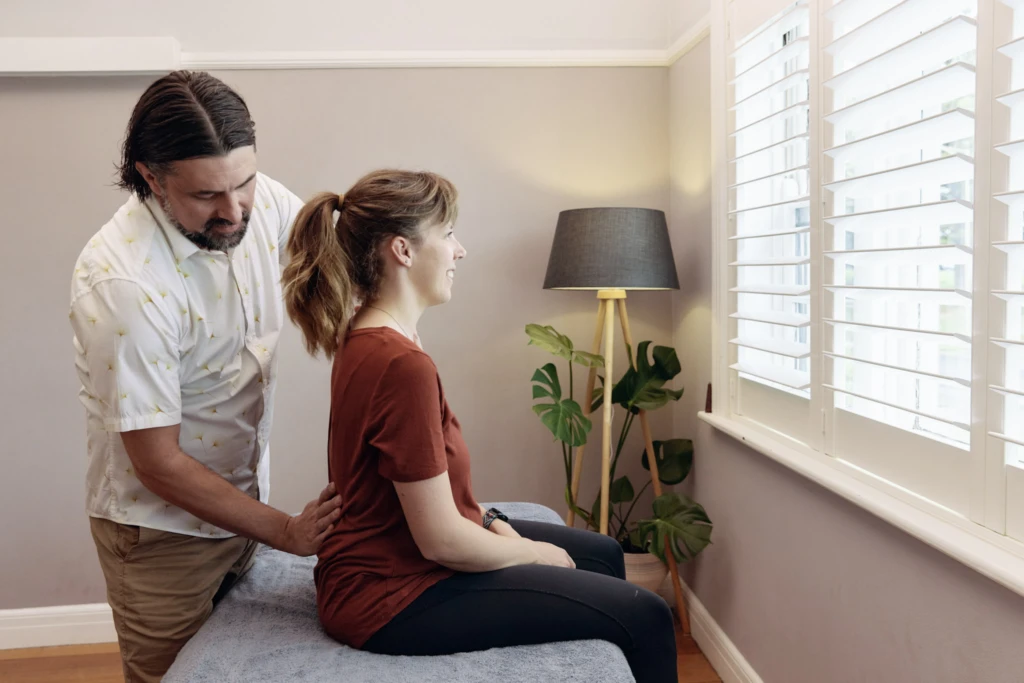
- We start with your story.
- Assessment comes before treatment.
- Treatment is included where clinically appropriate.
- You stay fully clothed.
- You leave with a plain-English explanation and next steps.
Current fees are shown in the booking system before you confirm. Full rundown on the Appointments page.

The Barefoot Bulletin
Look after your back between flare-ups.
Grounded, no-nonsense insights on movement, recovery, and everyday resilience — straight to your inbox, once a week. No spam, unsubscribe anytime.
Fair questions
The things people ask before they book.
Can osteopathy help with back pain?
Osteopathic care may help with back pain, depending on what’s contributing to the presentation.
Assessment comes first. The plan is based on what we find.
Do I need a referral?
No. You can book directly online.
If you have a Chronic Condition Management Plan from your GP, bring the paperwork with you.
What if my back pain has been there for years?
Long-standing back pain is common here.
It doesn’t automatically mean nothing can change. It usually means the pattern deserves a proper assessment.
What if my pain goes into my leg?
Leg symptoms need to be assessed carefully. They may involve nerve irritation, referred pain, hip involvement, or another pattern entirely.
If symptoms include progressive weakness, saddle numbness, or bladder or bowel changes, seek urgent medical care first.
Do I need a scan before I book?
Usually, no. Bring any imaging you already have, but you don’t need a scan to be assessed.
If imaging would genuinely change the plan, we’ll explain why.
Will I be treated at the first appointment?
In most cases, yes, where clinically appropriate. Assessment and screening come first.
If treatment isn’t suitable on the day, we’ll explain why.
How many appointments will I need?
It depends on your history, what assessment shows, and how your back responds.
Within the first few appointments, we want signs that the pattern is starting to make sense or shift. If it isn’t, we review the plan.
When should I see a doctor instead?
Seek urgent medical care for bladder or bowel changes, saddle numbness, progressive leg weakness, fever, unexplained weight loss, significant trauma, or severe worsening symptoms.
Those need medical assessment first.
Find us
On the highway.
Hard to miss.
On Raglan Parade, serving Warrnambool, Koroit, Port Fairy, and Allansford.
The Barefoot Osteo Warrnambool
728 Raglan Parade, Warrnambool VIC 3280
Tues & Wed 2:00–7:00pm
Fri & Sat 10:30am–4:00pm
Driving in from out of town? Port Fairy, Koroit, and Allansford pages cover the trip.

Ready when you are
If your back keeps leaving clues, let’s read them properly.
You bring the pattern: the bend, the flare-up, the car trip, the shoe under the couch. We’ll look at the whole picture. No hard sell — just a proper assessment and a plan in plain English.