
Knee Pain Warrnambool
The knee is where the problem shows up. Not always where it starts.
The Barefoot Osteo Warrnambool assesses knee pain by looking above and below the joint — hip control, ankle movement, and load — as well as the knee itself.
If your knee complains on stairs, after running, or just getting off the floor, scroll down to see how we assess it and what happens when you book. Or skip ahead and book your assessment now.
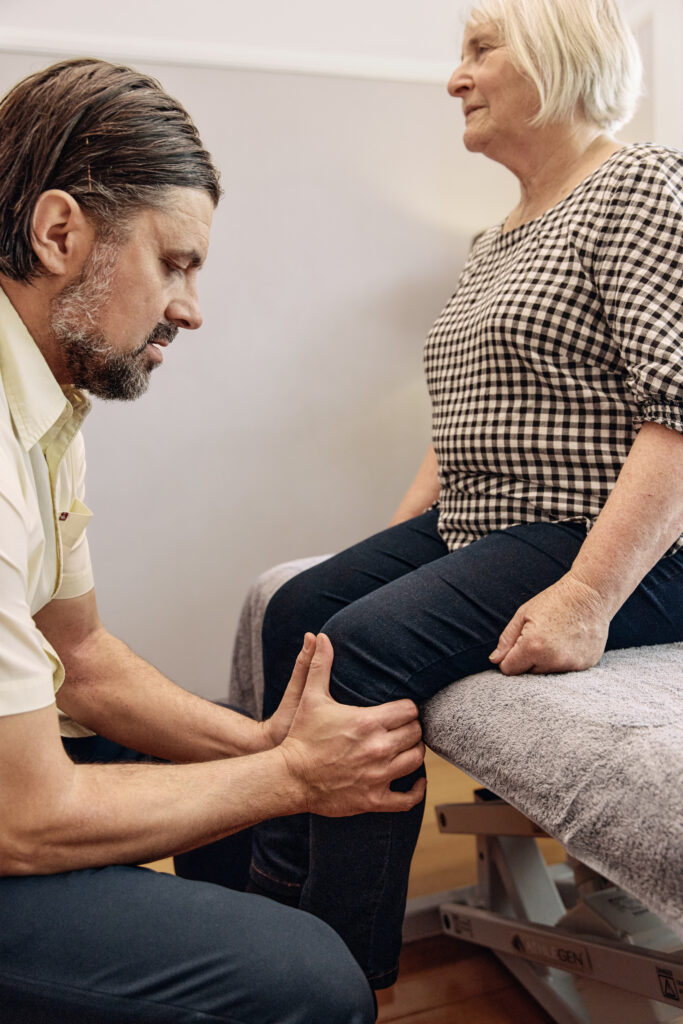
Sound familiar?
You’ve started coming down the stairs sideways.
Just on the bad days.
Knee pain changes how people move long before they book — The Barefoot Osteo Warrnambool starts by understanding those changes.
The first few steps down the stairs in the morning. The deep squat to the bottom drawer. Getting off the couch after a movie — that stiff-legged first stride you’ve started disguising as a stretch.
A knee that only behaves when you do less isn’t better. It’s just quieter.
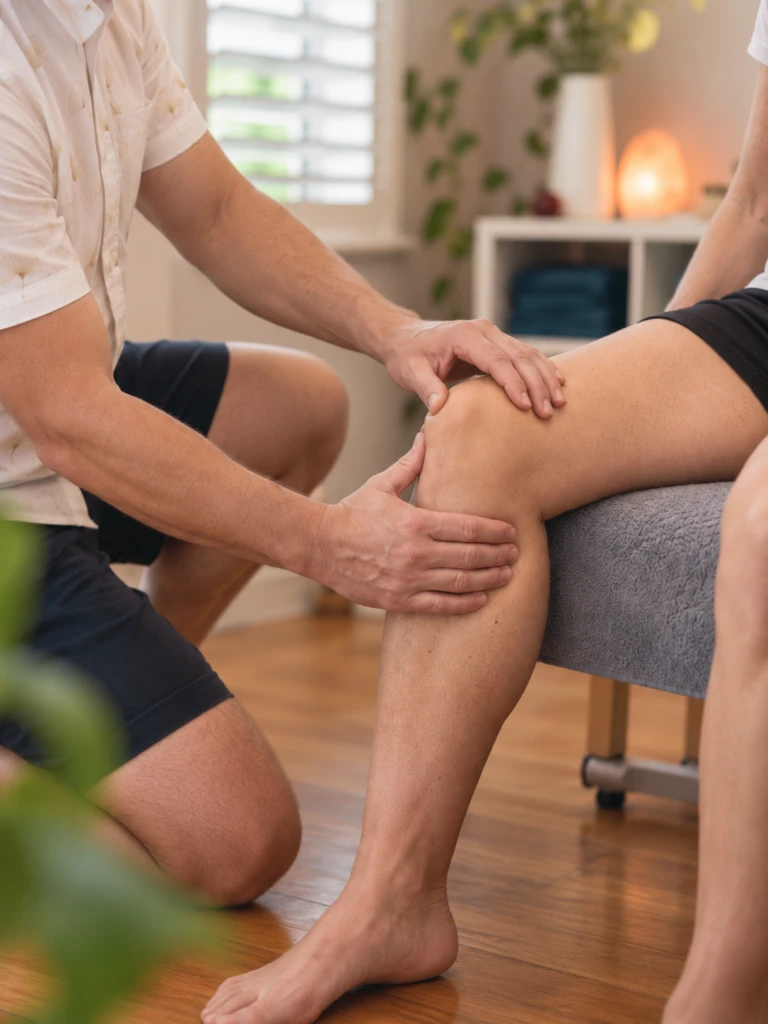
More ways this shows up
Maybe it’s the run that used to be fine and now isn’t past the 4k mark. Maybe it’s kneeling — gardening, playing with the kids, fixing something low — that’s quietly left the repertoire. Maybe it swells a little after a big day and you’ve stopped finding that strange.
You’ve iced it. Rested it. Maybe braced it. It settles. Then the week gets busy, and it’s back.
How it shows up
Different knees.
Same question underneath.
People searching for knee pain help in Warrnambool usually describe one of these patterns — The Barefoot Osteo assesses all of them.
- Pain at the front of the knee with stairs, squatting, or sitting too long
- Aching after running, netball, footy, or a return to training
- Pain on the inside or outside of the knee with no clear injury
- A knee that swells or stiffens after busy days
- Clicking or grinding that’s started bringing pain along
- A knee that feels unreliable — like it might give, even if it never has
See more patterns
- Stiffness getting up from the floor, the couch, or low chairs
- An old injury — done years ago — that’s started talking again
You don’t need a diagnosis before you walk in. Finding the pattern is the point of assessment.
Why it keeps happening
Knees mostly do what hips and ankles tell them to.
At The Barefoot Osteo Warrnambool, we assess why knee pain keeps returning — including hip strength and control, ankle mobility, movement habits, and training load.
Here’s the thing about the knee: it’s a hinge living between two joints with far more freedom. The hip above it moves in every direction. The ankle below it manages every step’s contact with the ground. The knee mostly transmits whatever those two decide.
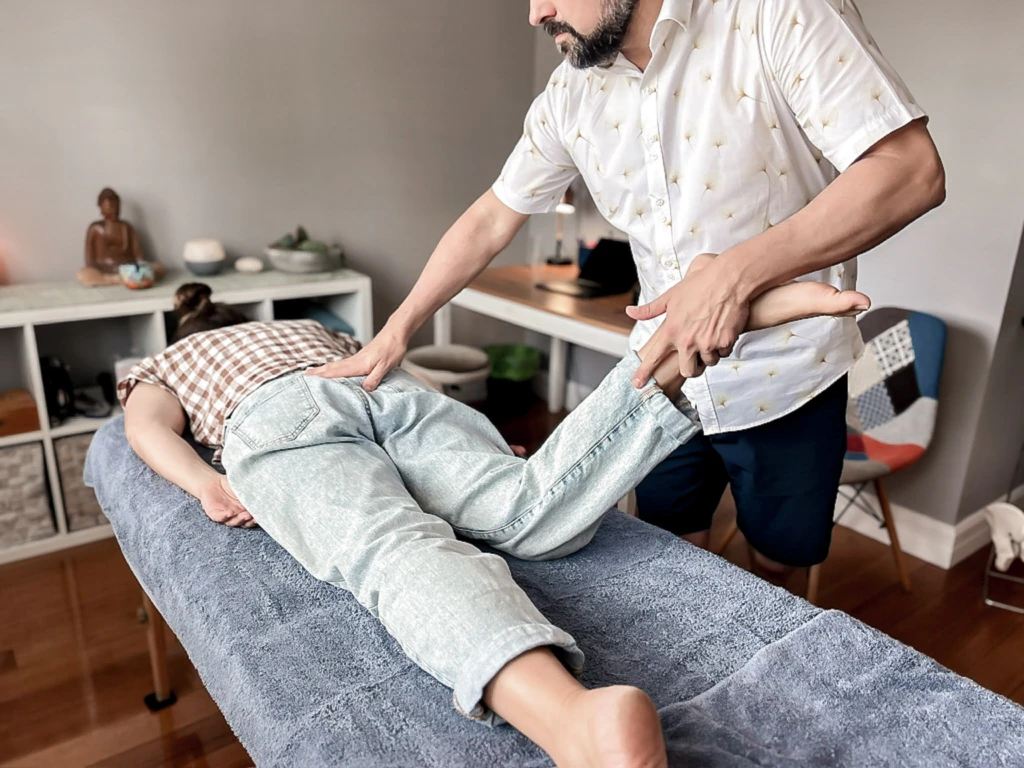
Most people treat what hurts.
We find out why it keeps happening.
Why the knee is usually the messenger, not the villain
So when the hip stops controlling the leg properly — strength fades, control gets lazy, years of sitting do their quiet work — the knee absorbs forces it was never meant to manage. When an ankle stiffens after old sprains, the knee covers the missing movement on every single step.
Ten thousand steps a day. Every day. Small errors, repeated often enough, become loud ones.
That’s why treating the knee alone so often disappoints. You can settle the sore tissue beautifully — and if the hip and ankle are still sending the same bill, the knee keeps paying it.
How we assess
We assess the whole leg. The knee’s just where we were invited in.
Knee assessment at The Barefoot Osteo Warrnambool includes case history, movement testing, and hip, ankle, and gait observation, with orthopaedic screening where appropriate.
1
Your story
Old injuries, training changes, what the knee has started declining.
2
Your whole chain
Hip strength and control, ankle mobility, how you squat, step, and land.
3
Screening where needed
Orthopaedic screening where appropriate.
Then the explanation — what we found and why it matters, in plain English. Full method on the How We Work page.
Not sure where you fit?
Find your back pain pattern in 3 minutes.
Answer a few quick questions and get a plain-English read on the pattern that keeps bringing it back — no email required to see your result.
What care may include
Treatment is only useful if the knee can handle Tuesday.
Care may include hands-on treatment, movement work, and a load plan built around what your knee needs to tolerate again.
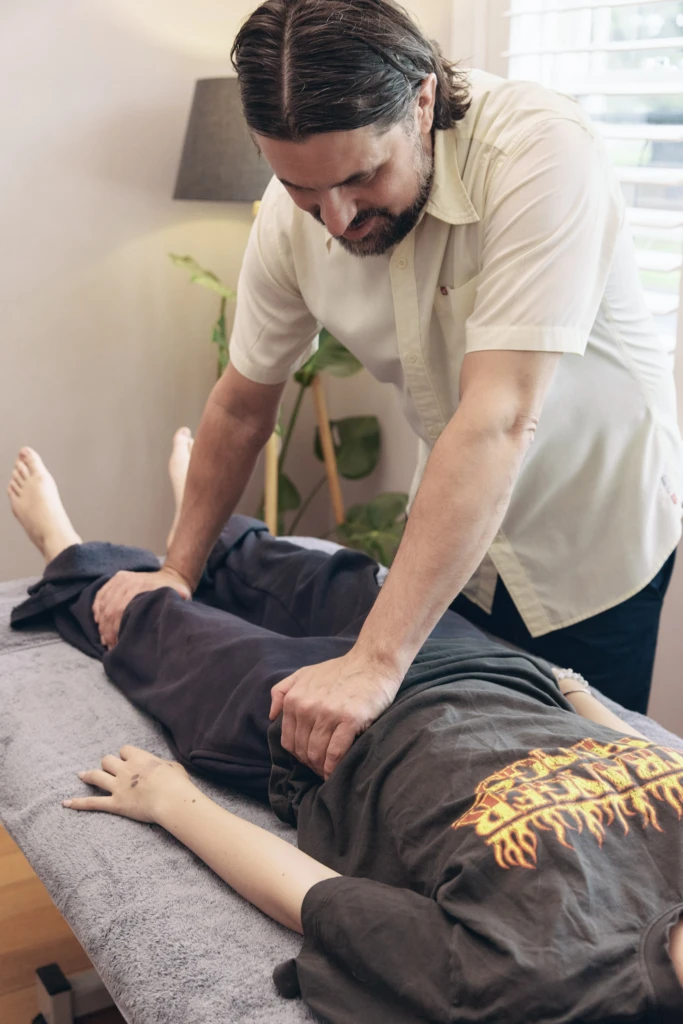
01
Settle what is irritable
Hands-on care where appropriate, without pretending the sore spot is the whole story.
02
Keep the useful movement
Work out what to ease back temporarily and what the knee is better off continuing.
03
Rebuild tolerance
Strength, control, and exposure to the loads the knee has started avoiding.
What treatment can include
Hands-on treatment through the knee, hip, and ankle, and exercise prescription aimed at the actual finding — often hip control and leg strength, sometimes ankle mobility, sometimes simply rebuilding the knee’s tolerance for load it’s lost confidence in.
Your plan depends on what’s driving your presentation, how your body responds, and what you want the knee to handle again.
What we’re actually after
A good knee day is the one you don’t notice.
The target isn’t a perfect joint. It’s getting back to ordinary things without negotiating with your knee first.
- stairs
- getting off the floor
- walking further
- training again
First
Less pain
Settle the flare enough that the knee stops running the whole conversation.
Then
More tolerance
The knee starts handling more of the things you actually need it for, without every increase in load becoming a negotiation.
The destination
Less monitoring.
The knee takes up less space in your head because ordinary movement stops needing a risk assessment first.
A knee you don’t monitor is a knee you trust.
When to see a doctor first
Some knee pain needs medical assessment before anything else.
See a doctor first — or seek urgent care — if your knee pain involves:
- A significant injury with a pop, immediate swelling, or inability to bear weight
- The knee locking — genuinely stuck, not just stiff
- Giving way repeatedly
- A hot, red, swollen joint, or fever with knee pain
- Constant night pain that doesn’t change with position
- Unexplained weight loss or feeling generally unwell
That list isn’t exhaustive — if something about your situation feels off, get it checked.
What to expect if you book
Booking shouldn’t be the stressful part.
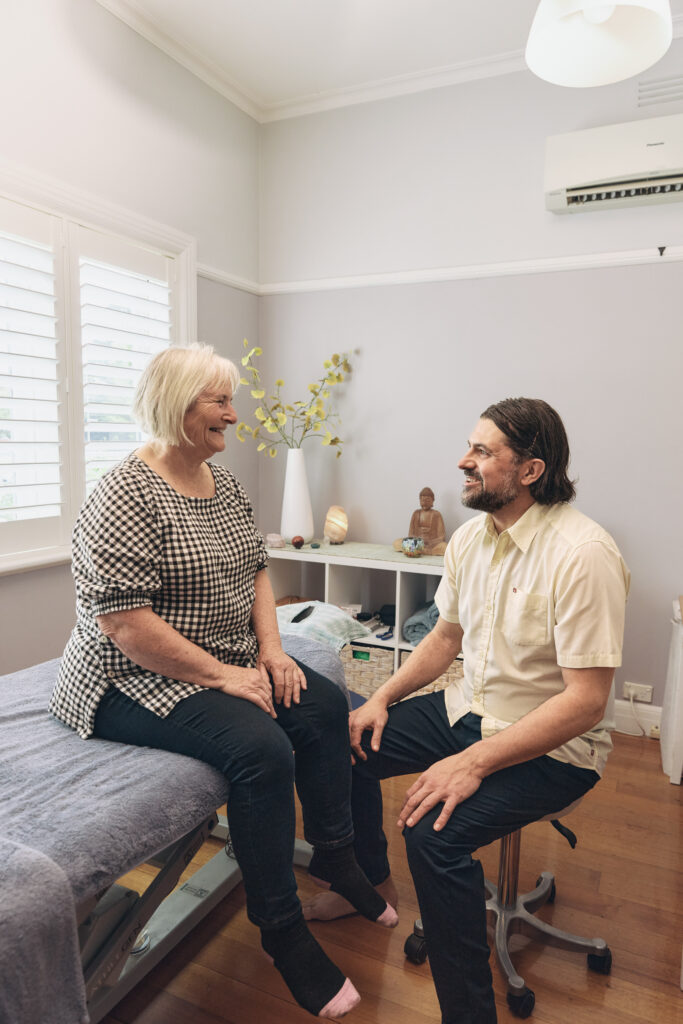
1
Your story first
Old injuries, training changes, what the knee has started declining.
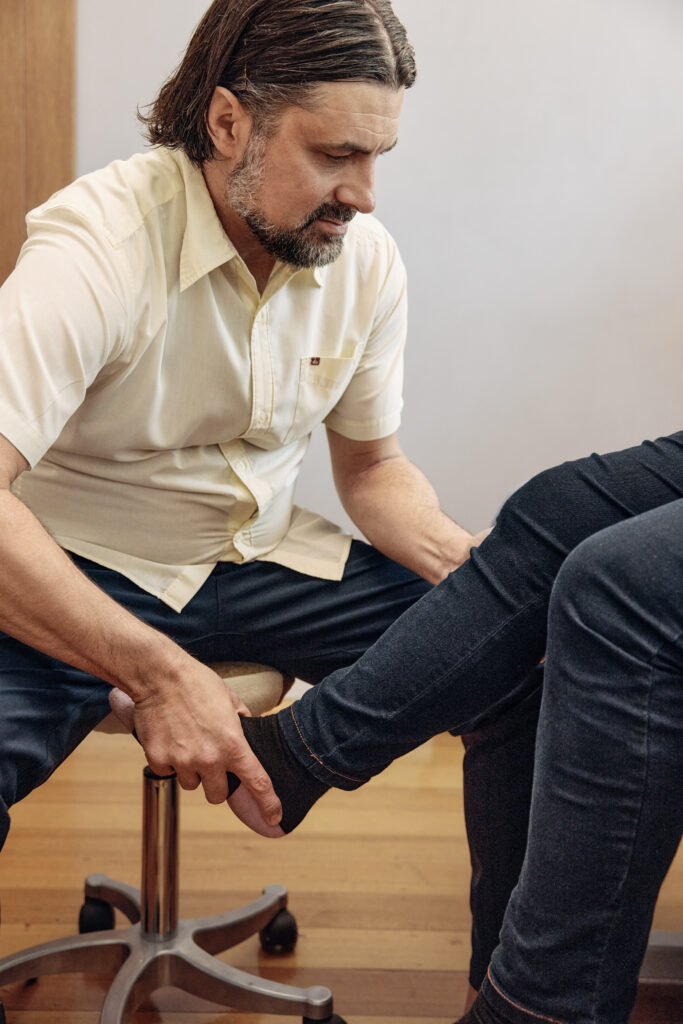
2
Assessment, then treatment
Shorts or loose pants make knee assessment easier — comfortable is the only rule.
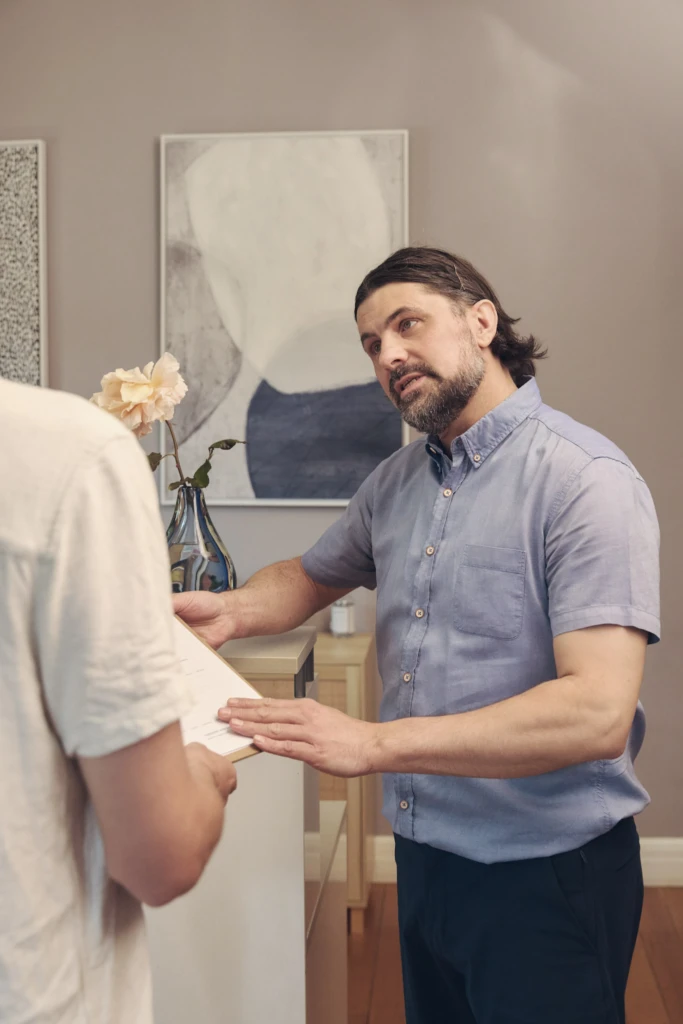
3
A clear explanation and plan
Fees shown in the booking system before you confirm. Full rundown on the Fees page.

The Barefoot Bulletin
Look after your knee between flare-ups.
Grounded, no-nonsense insights on movement, recovery, and everyday resilience — straight to your inbox, once a week. No spam, unsubscribe anytime.
Quick questions
The things people ask before they book.
Can osteopathy help with knee pain?
Osteopathic care may help with knee pain, depending on what’s driving it. Assessment comes first — including the hip and ankle, not just the knee.
My scan says wear and tear. Is it worth coming in?
Often, yes. “Wear and tear” is usually the translation, not what the report actually says — and changes on imaging are common, including in knees that don’t hurt. We assess the person in front of us, not just the scan. If your presentation needs GP or specialist-level input, we’ll say so.
Do I need a scan first?
No. Bring any imaging you have, but assessment doesn’t require it. If imaging would genuinely change the plan, we’ll tell you why.
My knee clicks. Should I worry?
Clicking on its own is usually unremarkable — joints are noisy. Clicking with pain, swelling, or locking is worth assessing.
Will I be treated at the first appointment?
In most cases, yes — assessment first, then treatment where clinically appropriate. If it’s not suitable on the day, we’ll explain why.
How many appointments will I need?
Depends on the history and how the knee responds. Within the first few appointments we want signs the pattern is changing. If it isn’t, we change the plan.
When should I see a doctor instead?
After a significant injury with immediate swelling or inability to bear weight, with locking or repeated giving way, a hot swollen joint, or fever — doctor first.
Find us
On the highway.
Hard to miss.
On Raglan Parade, serving Warrnambool, Koroit, Port Fairy, and Allansford.
The Barefoot Osteo Warrnambool
728 Raglan Parade, Warrnambool VIC 3280
Tues & Wed 2:00–7:00pm
Fri & Sat 10:30am–4:00pm
Driving in from out of town? Port Fairy, Koroit, and Allansford pages cover the trip.

Ready when you are
If your knee keeps sending messages, let’s find out who’s writing them.
You don’t need to know whether it’s the knee, the hip, the ankle, or an old injury with unfinished business.
You bring the pattern. We’ll trace the picture. No commitment. No hard sell. Just a proper assessment and a plan in plain English.